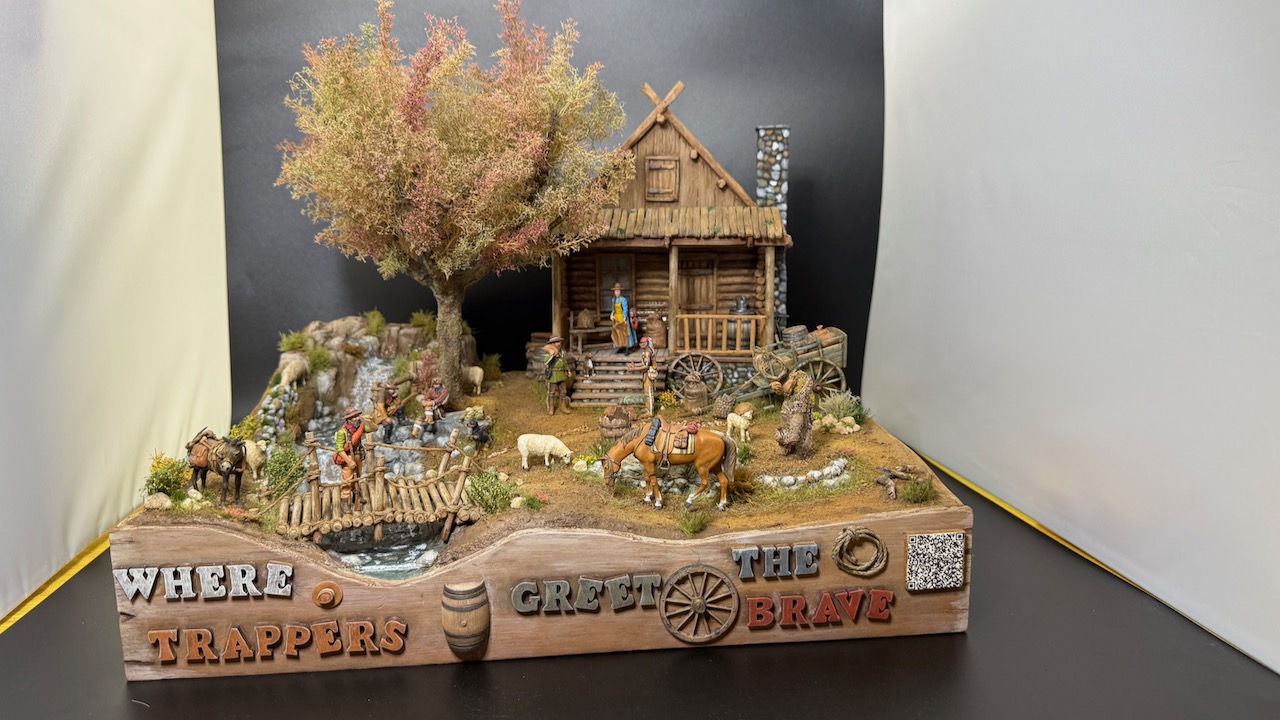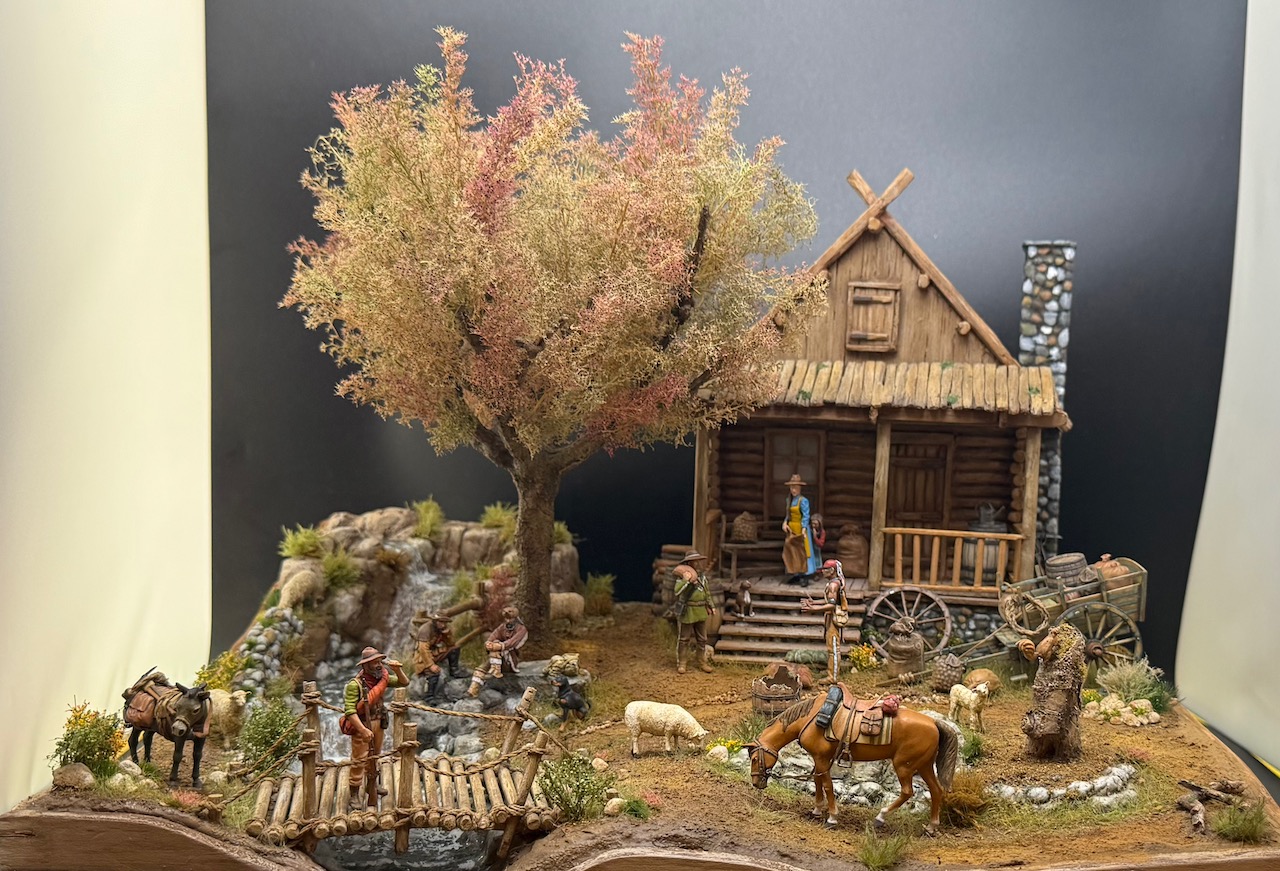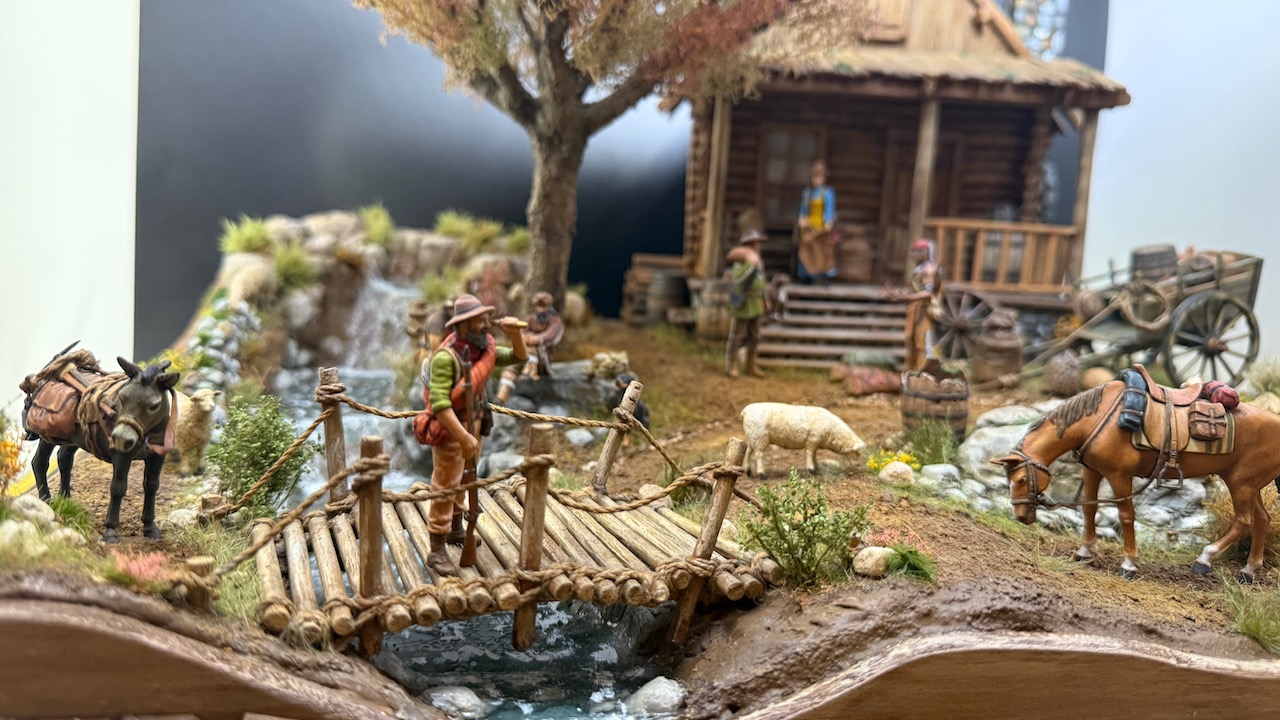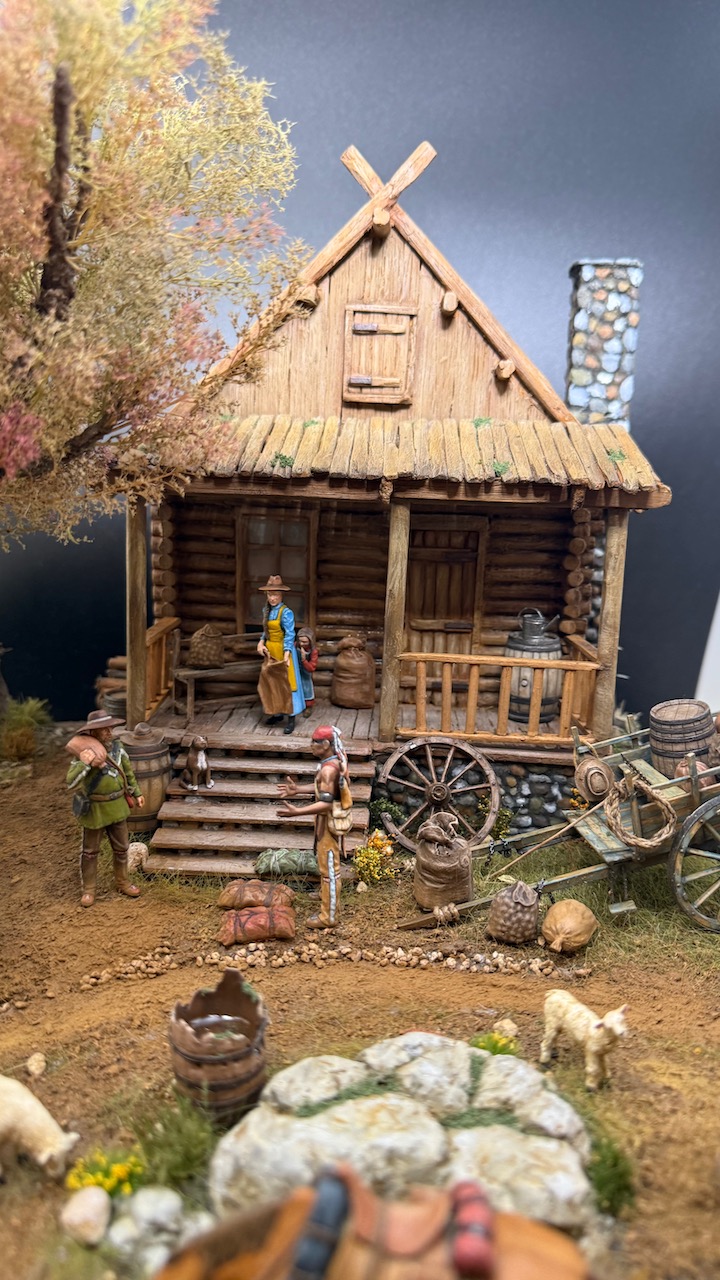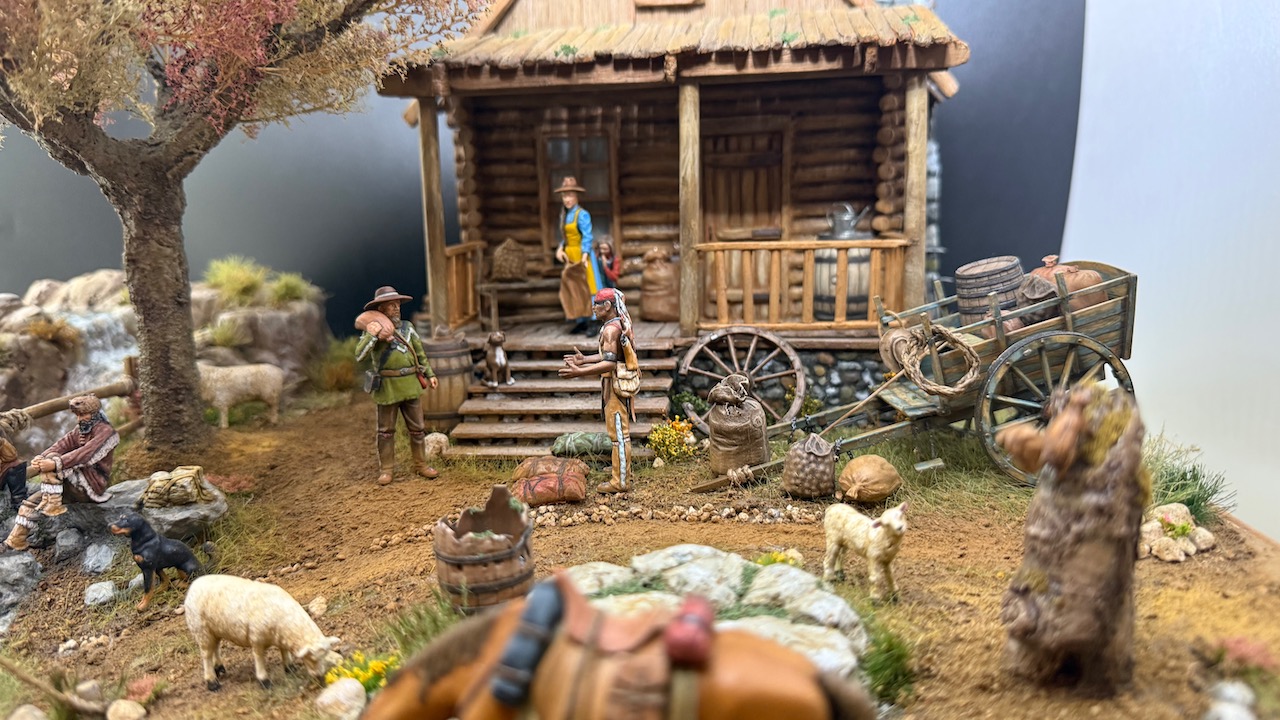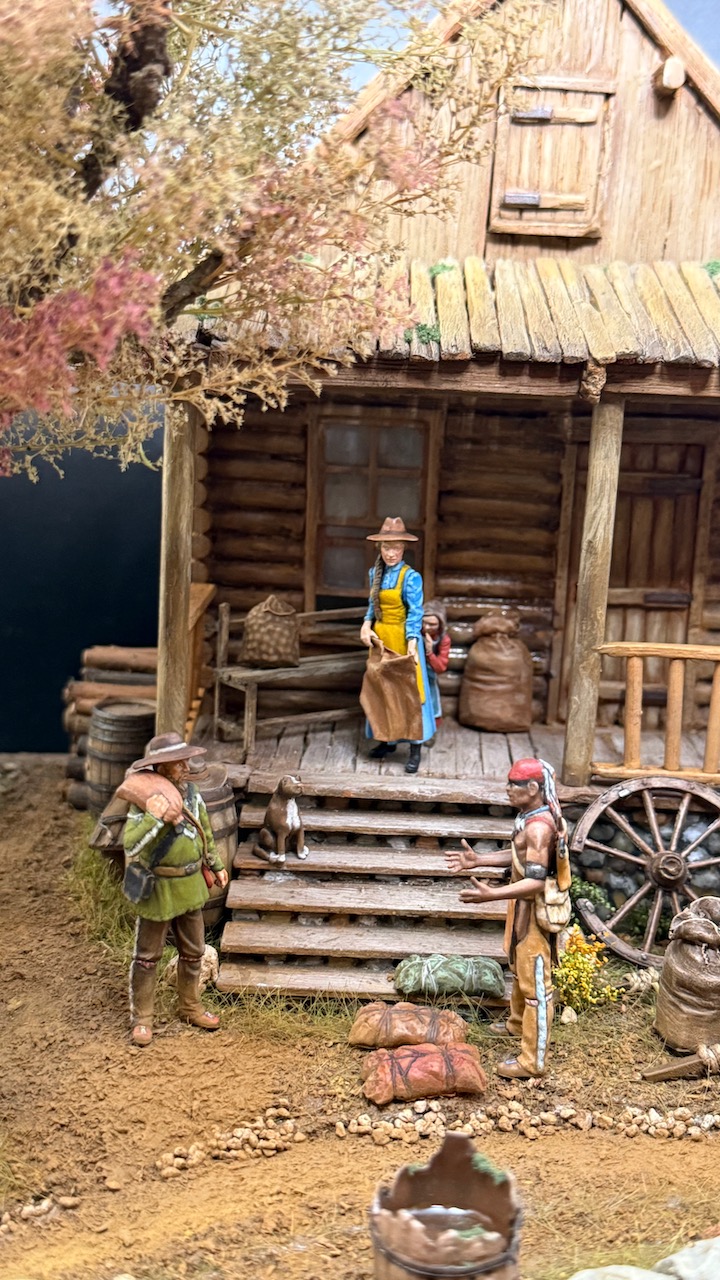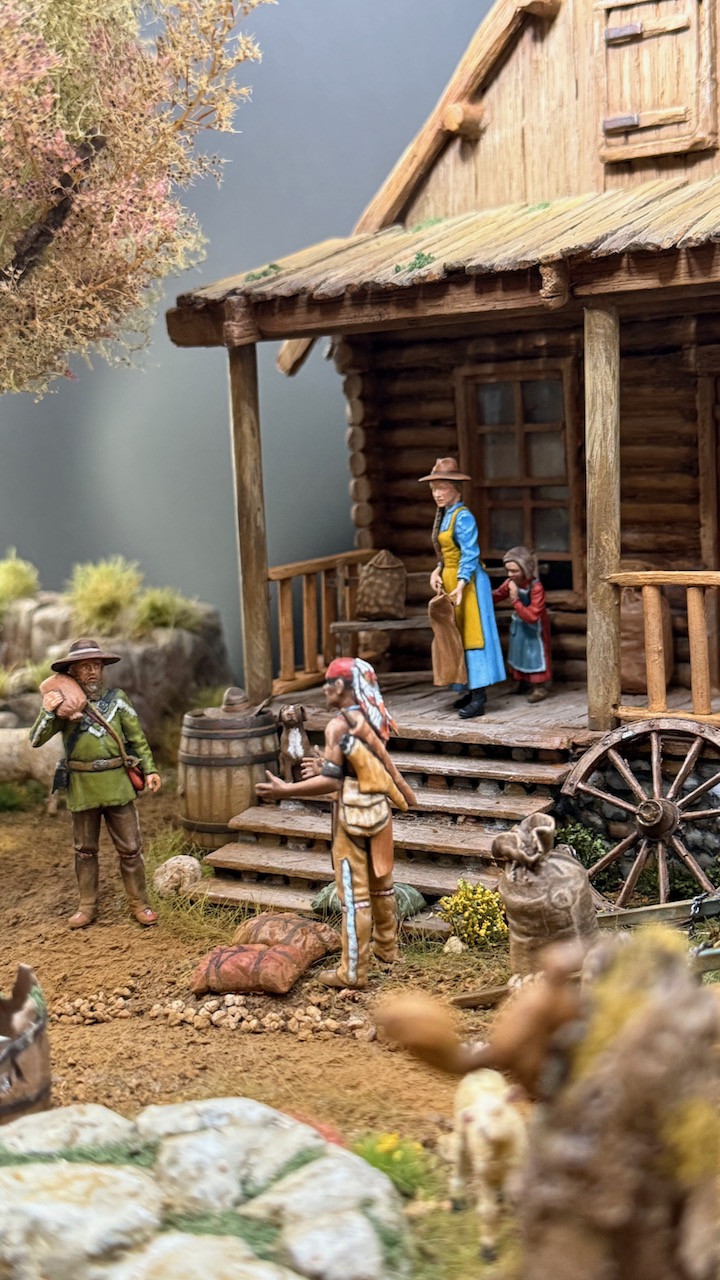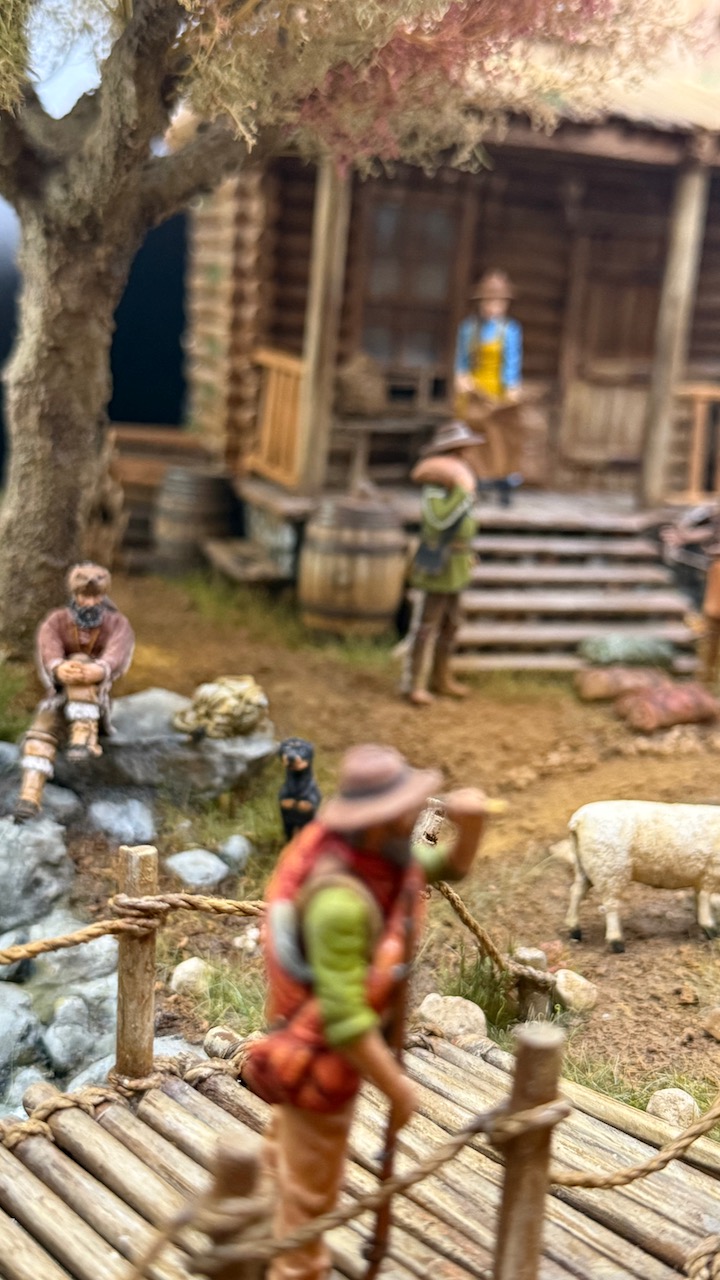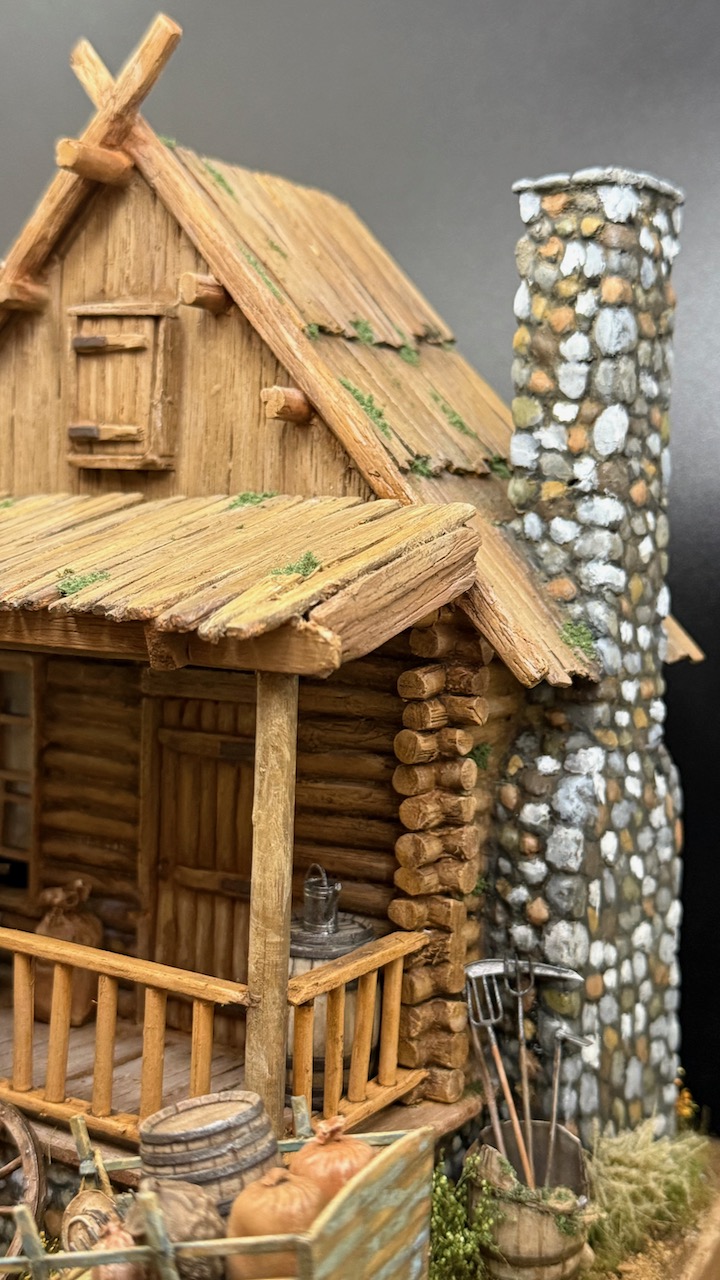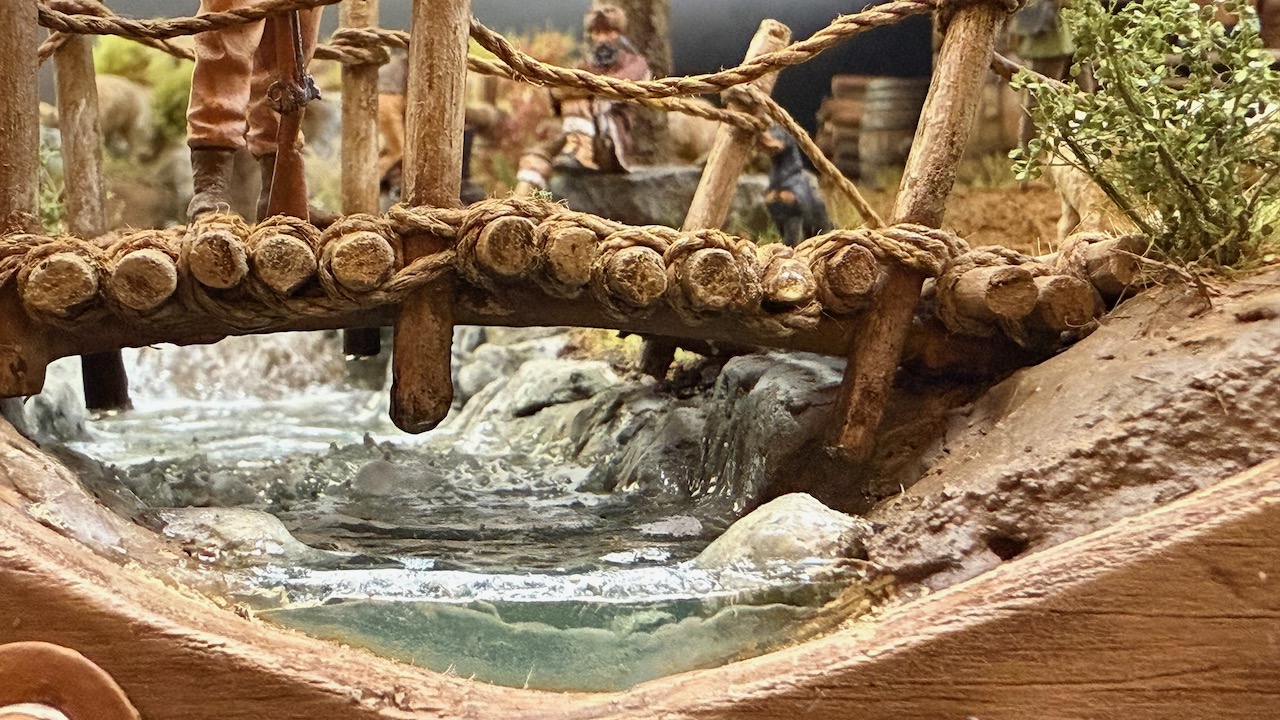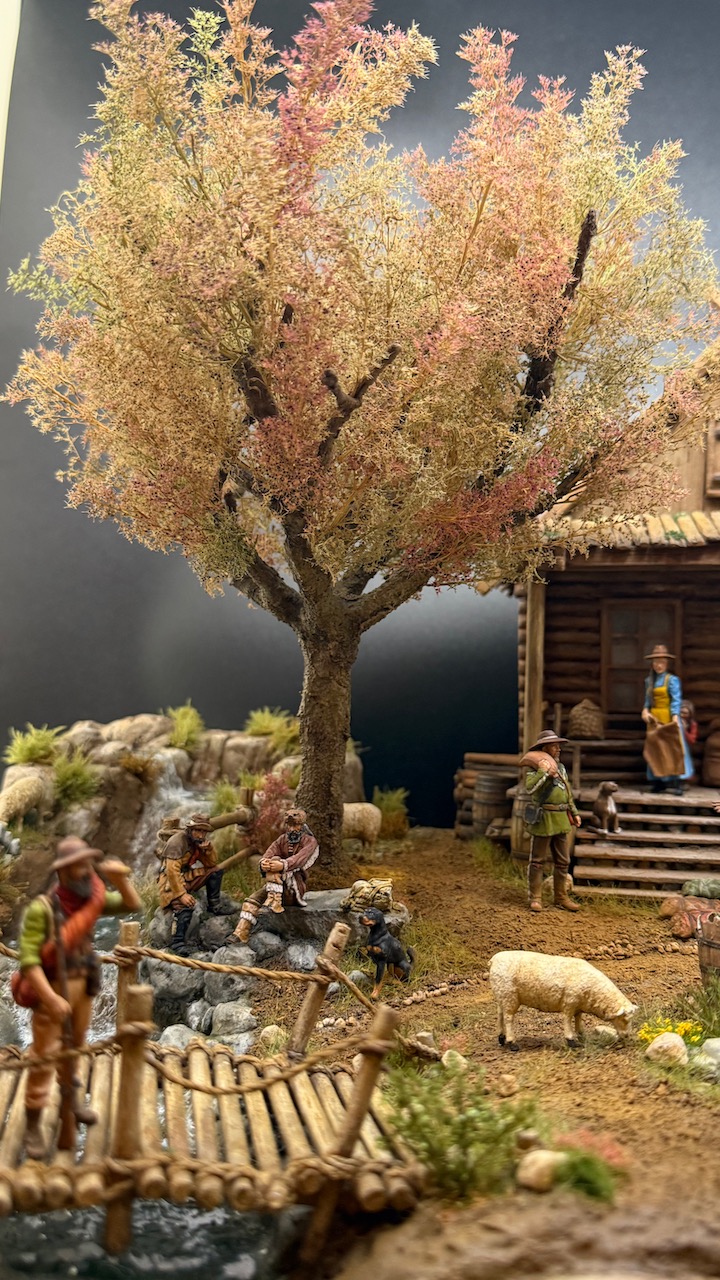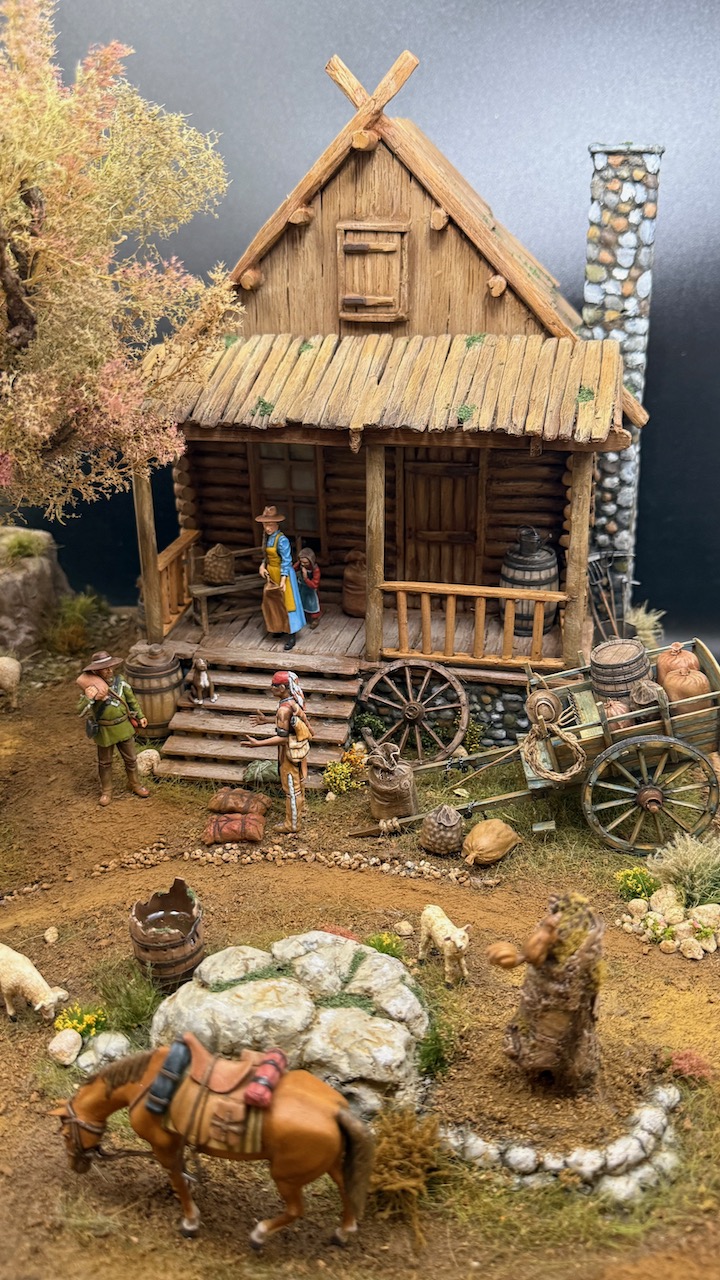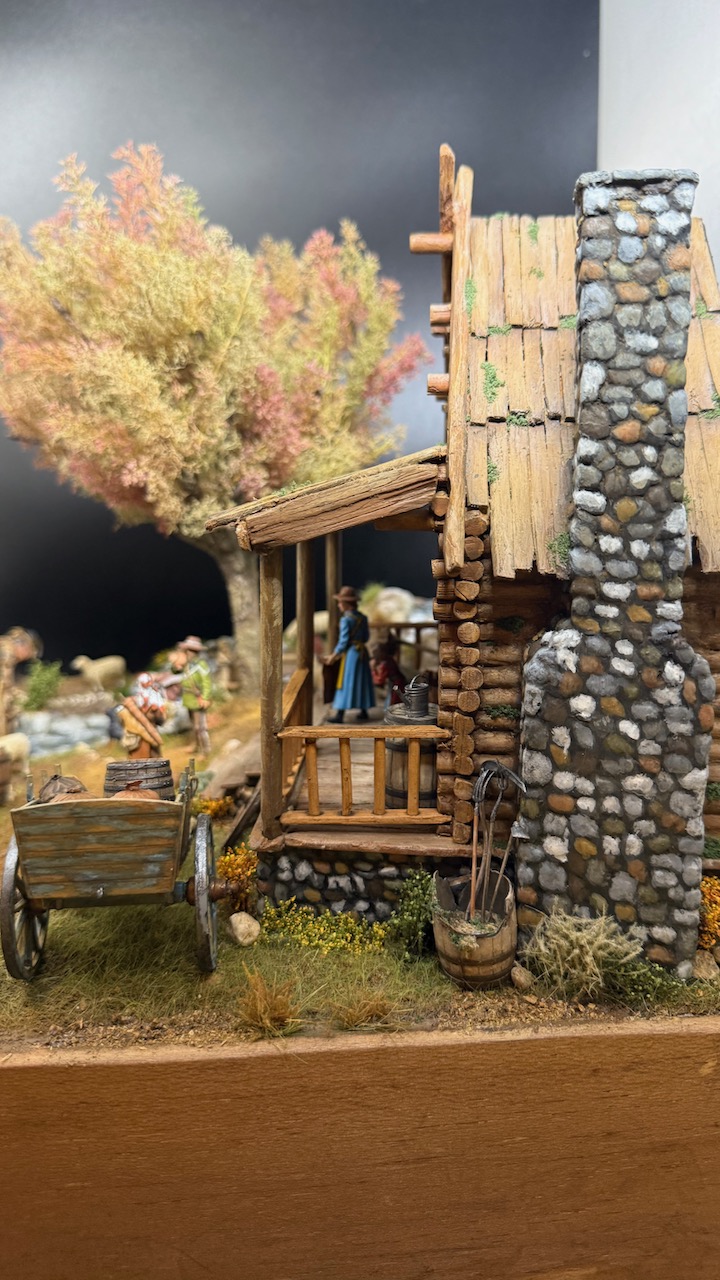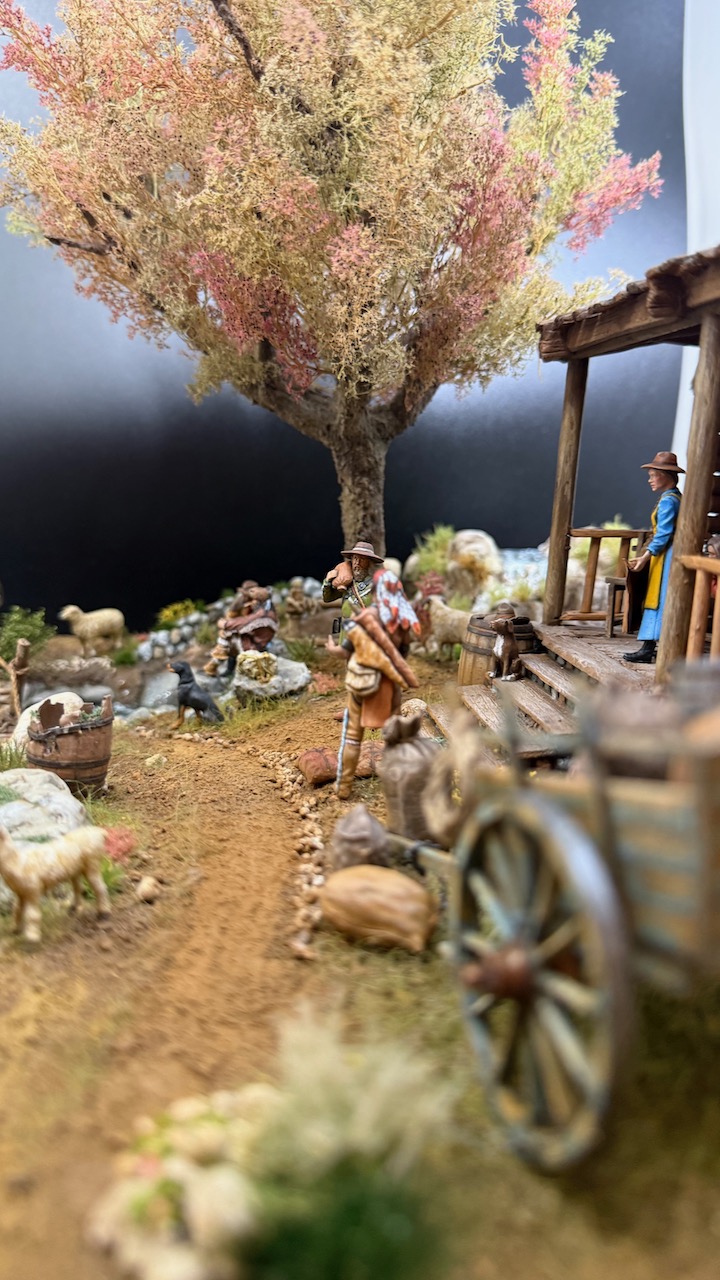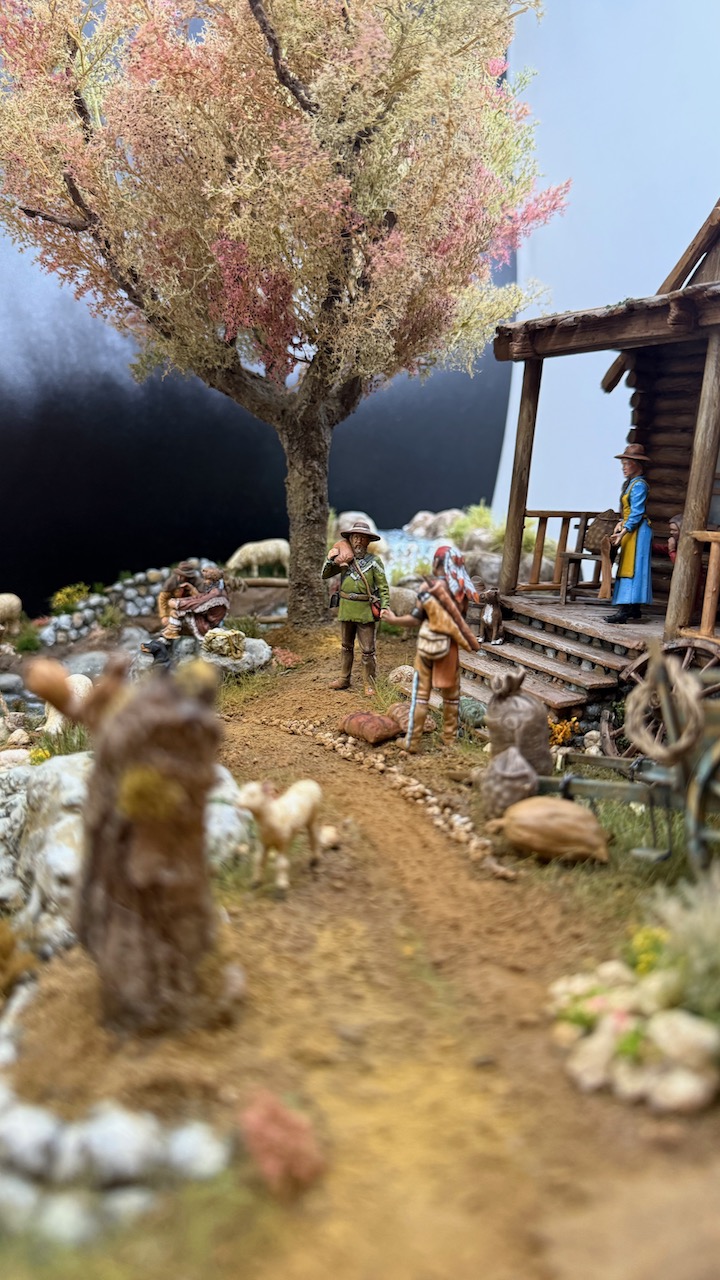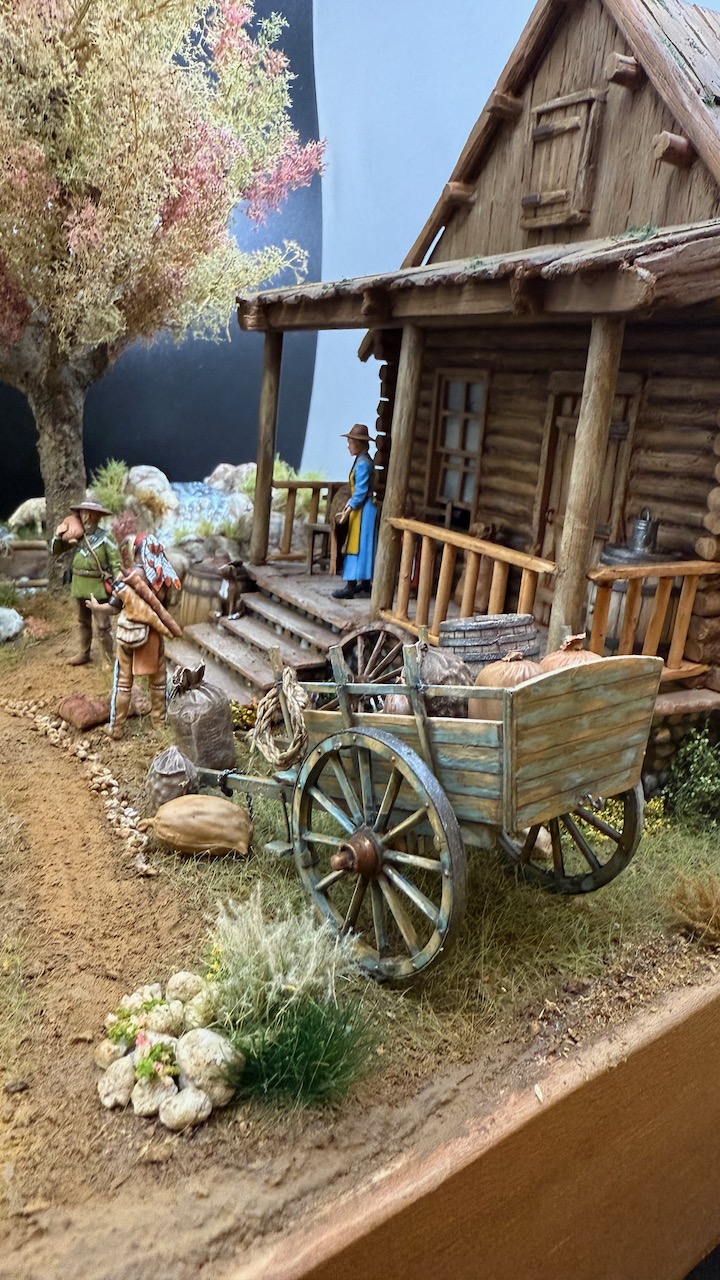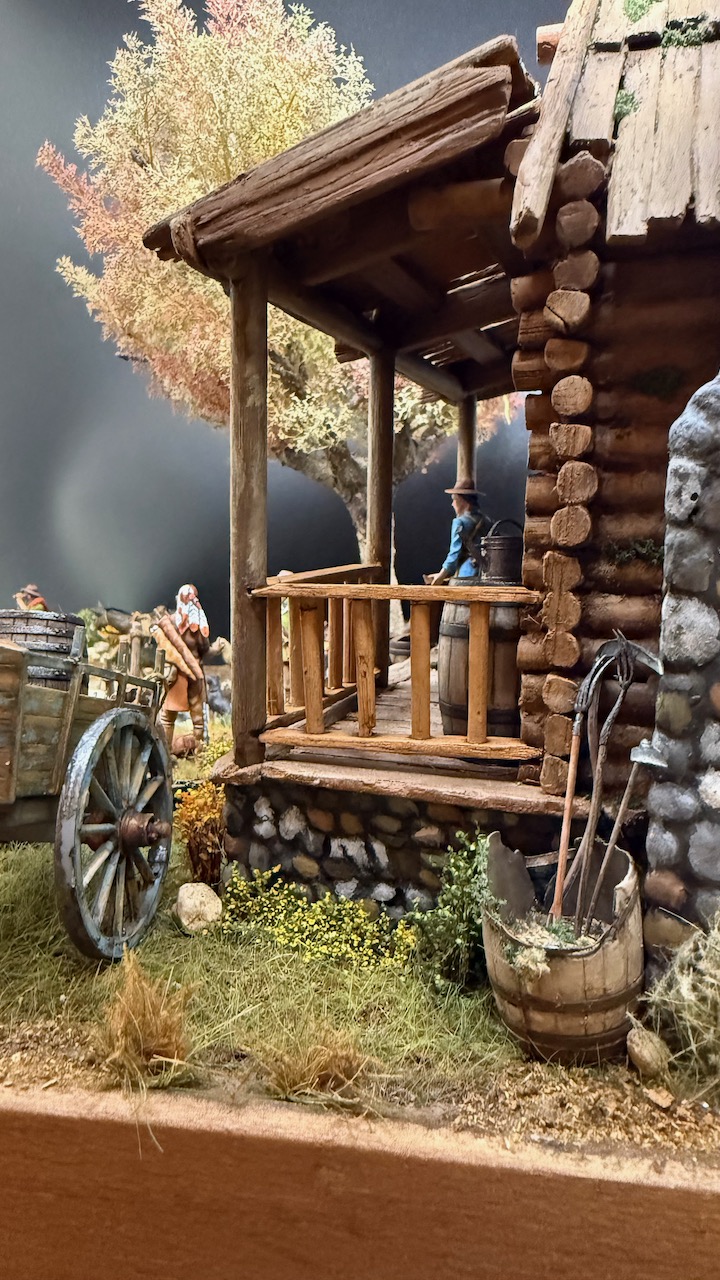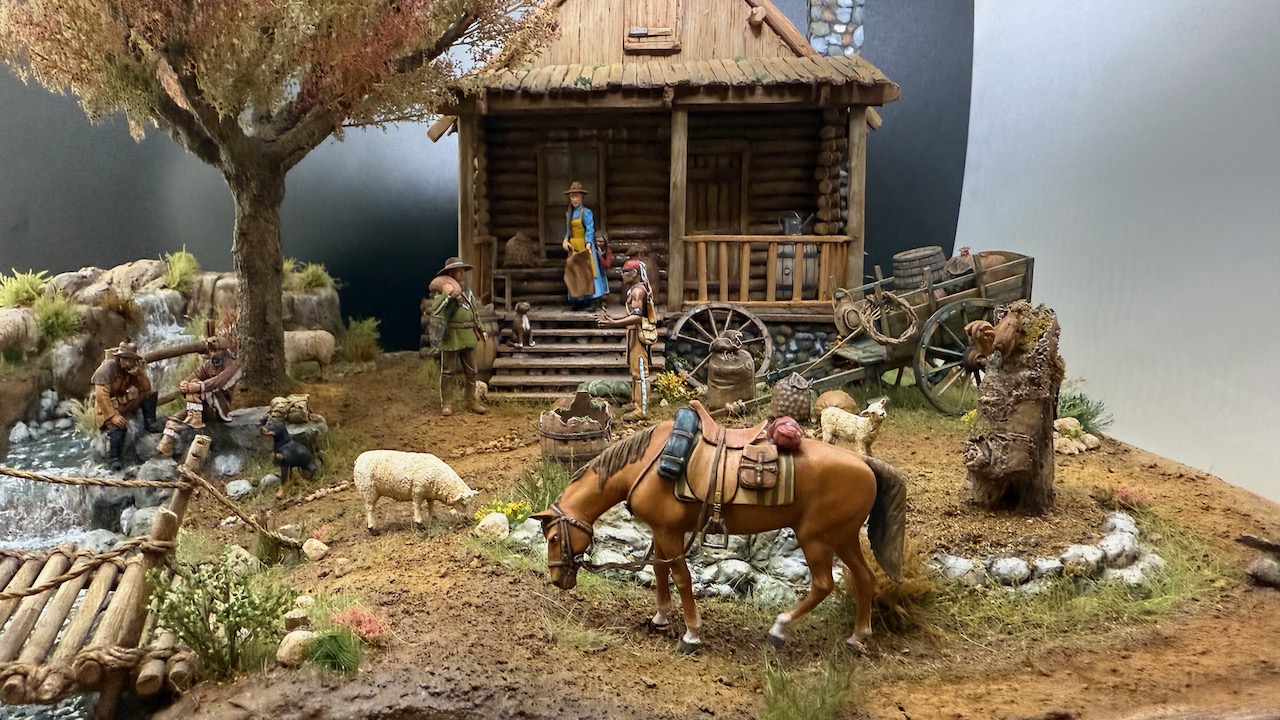
Era una mattina chiara e immobile, il sole filtrava tra i rami dell'acero campestre che da anni dominava la piccola radura lungo il ruscello. Le acque limpide scorrevano lente sotto il ponte di legno curvato, costruito a mano dal padrone di casa, Elias "Elk" Morgan, con l'aiuto del fratello minore, Wade. Il ponte collegava la casa, in legno e mattoni con il camino fumante, al sentiero che saliva verso le montagne.
Elias era un uomo di poche parole, temprato dalla solitudine e dai lunghi inverni. Ma chi lo conosceva bene sapeva che dietro quella barba grigia e quegli occhi severi, si celava un uomo che aveva scelto la pace dopo anni di vita dura. Oggi, davanti a lui, c'era Tahu, un giovane guerriero della tribù Wapiti. Non era la prima volta che si incontravano.
It was a clear and still morning, the sun filtering through the branches of the field maple that had dominated the small clearing along the stream for years. The clear waters flowed slowly under the curved wooden bridge, hand-built by the owner of the house, Elias "Elk" Morgan, with the help of his younger brother, Wade. The bridge connected the house, made of wood and brick with the smoking chimney, to the path that led up towards the mountains. Elias was a man of few words, tempered by solitude and long winters. But those who knew him well knew that behind that gray beard and those stern eyes, there was a man who had chosen peace after years of a hard life. Today, in front of him, there was Tahu, a young warrior of the Wapiti tribe. It was not the first time they had met.
C'était une matinée claire et calme, le soleil filtrant à travers les branches de l'érable champêtre qui dominait la petite clairière le long du ruisseau depuis des années. Les eaux claires coulaient lentement sous le pont de bois incurvé, construit à la main par le propriétaire de la maison, Elias « Elk » Morgan, avec l'aide de son jeune frère, Wade. Le pont reliait la maison, faite de bois et de briques, avec sa cheminée fumante, au sentier qui montait vers les montagnes. Elias était un homme peu bavard, tempéré par la solitude et les longs hivers. Mais ceux qui le connaissaient bien savaient que derrière sa barbe grise et son regard sévère se cachait un homme qui avait choisi la paix après des années d'une vie difficile. Aujourd'hui, devant lui, se tenait Tahu, un jeune guerrier de la tribu des Wapitis. Ce n'était pas la première fois qu'ils se rencontraient.
Era una mañana clara y tranquila, con el sol filtrándose entre las ramas del arce que había dominado el pequeño claro junto al arroyo durante años. Las aguas cristalinas fluían lentamente bajo el puente curvo de madera, construido a mano por el dueño de la casa, Elias "Elk" Morgan, con la ayuda de su hermano menor, Wade. El puente conectaba la casa, de madera y ladrillo con la chimenea humeante, con el sendero que ascendía hacia las montañas. Elias era un hombre de pocas palabras, templado por la soledad y los largos inviernos. Pero quienes lo conocían bien sabían que tras esa barba canosa y esa mirada severa, se escondía un hombre que había elegido la paz tras años de una vida dura. Hoy, frente a él, estaba Tahu, un joven guerrero de la tribu Wapiti. No era la primera vez que se veían.
Es war ein klarer, stiller Morgen. Die Sonne schien durch die Zweige des Feldahorns, der seit Jahren die kleine Lichtung am Bach dominierte. Das klare Wasser floss langsam unter der geschwungenen Holzbrücke hindurch, die der Hausbesitzer Elias „Elk“ Morgan mit Hilfe seines jüngeren Bruders Wade selbst gebaut hatte. Die Brücke verband das Haus aus Holz und Ziegeln mit dem rauchenden Schornstein mit dem Pfad, der hinauf in die Berge führte. Elias war ein Mann weniger Worte, geprägt von Einsamkeit und langen Wintern. Doch wer ihn gut kannte, wusste, dass sich hinter seinem grauen Bart und seinen strengen Augen ein Mann verbarg, der sich nach Jahren eines harten Lebens für den Frieden entschieden hatte. Heute stand Tahu vor ihm, ein junger Krieger des Wapiti-Stammes. Es war nicht das erste Mal, dass sie sich begegneten.
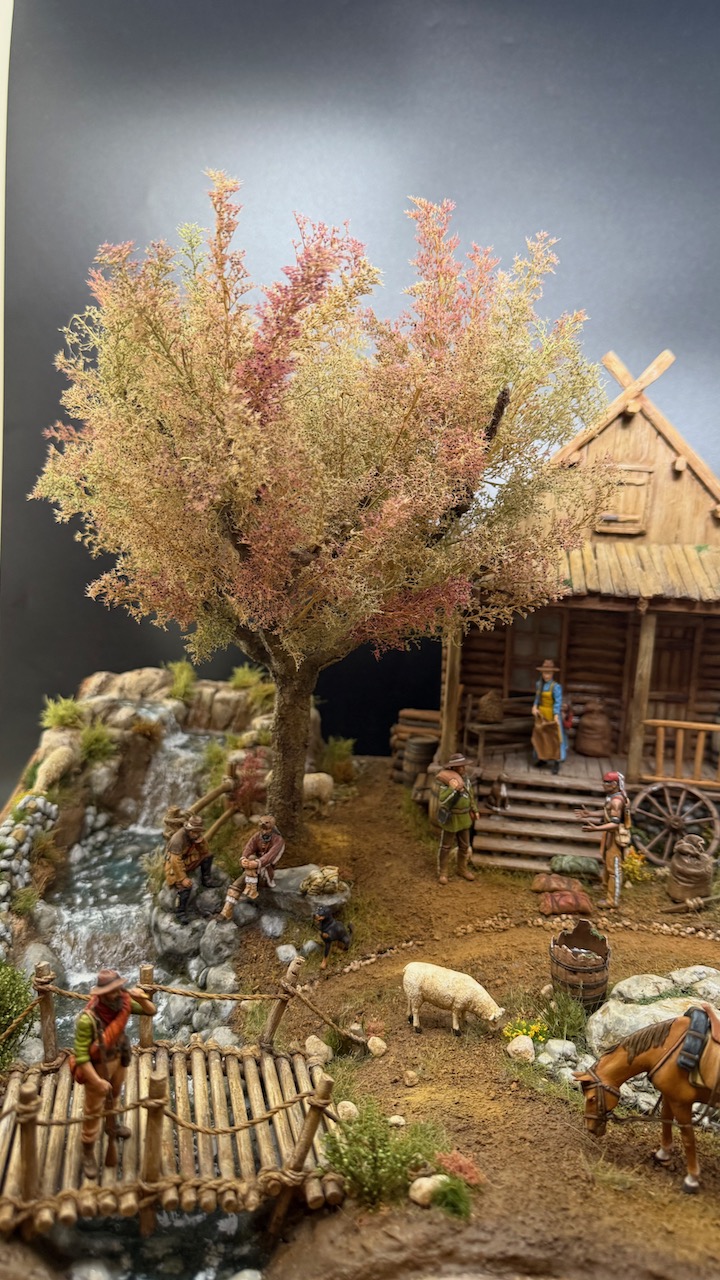
Sei anni prima, Elias era stato colpito a una gamba durante una battuta di caccia nei territori oltre Timber Ridge. Perso nel bosco e in pieno inverno, era stato Tahu, allora poco più che un ragazzo, a trovarlo, disarmato e svenuto. Nonostante la tensione tra trappers e indiani, Tahu lo aveva curato per tre giorni in un rifugio improvvisato, poi lo aveva aiutato a tornare a valle. Non si erano più visti da allora. Fino ad oggi.
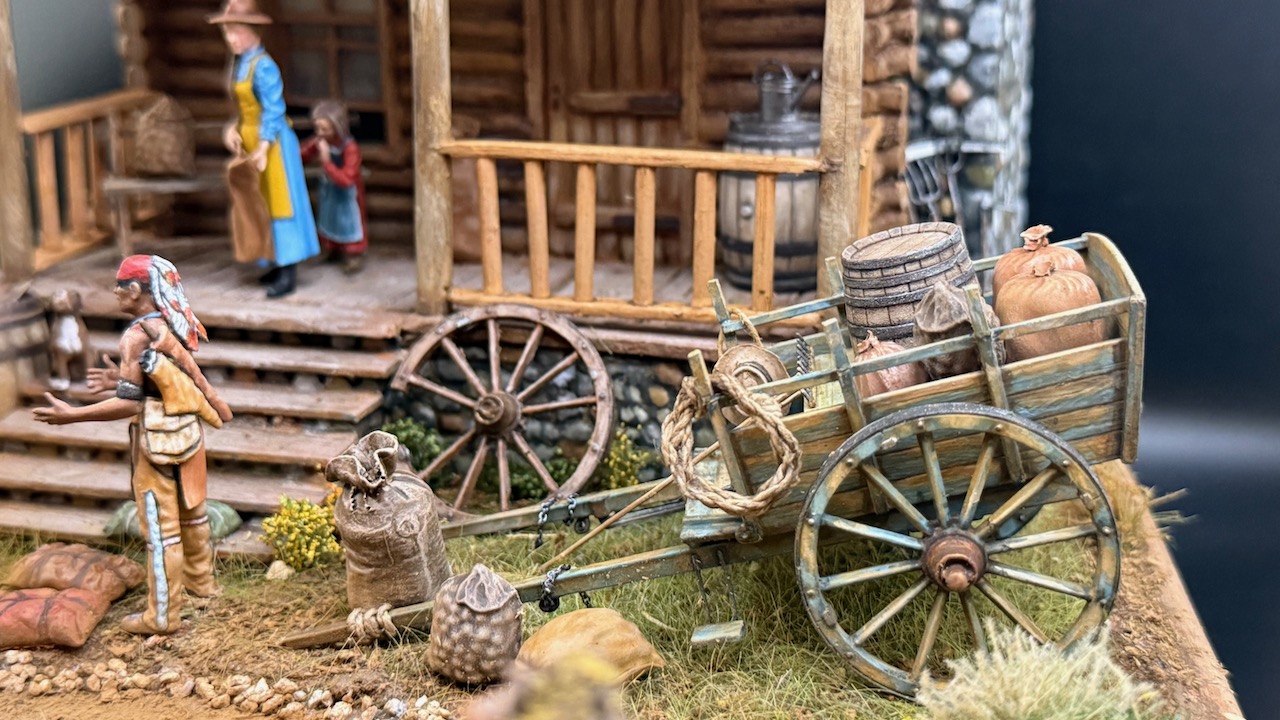
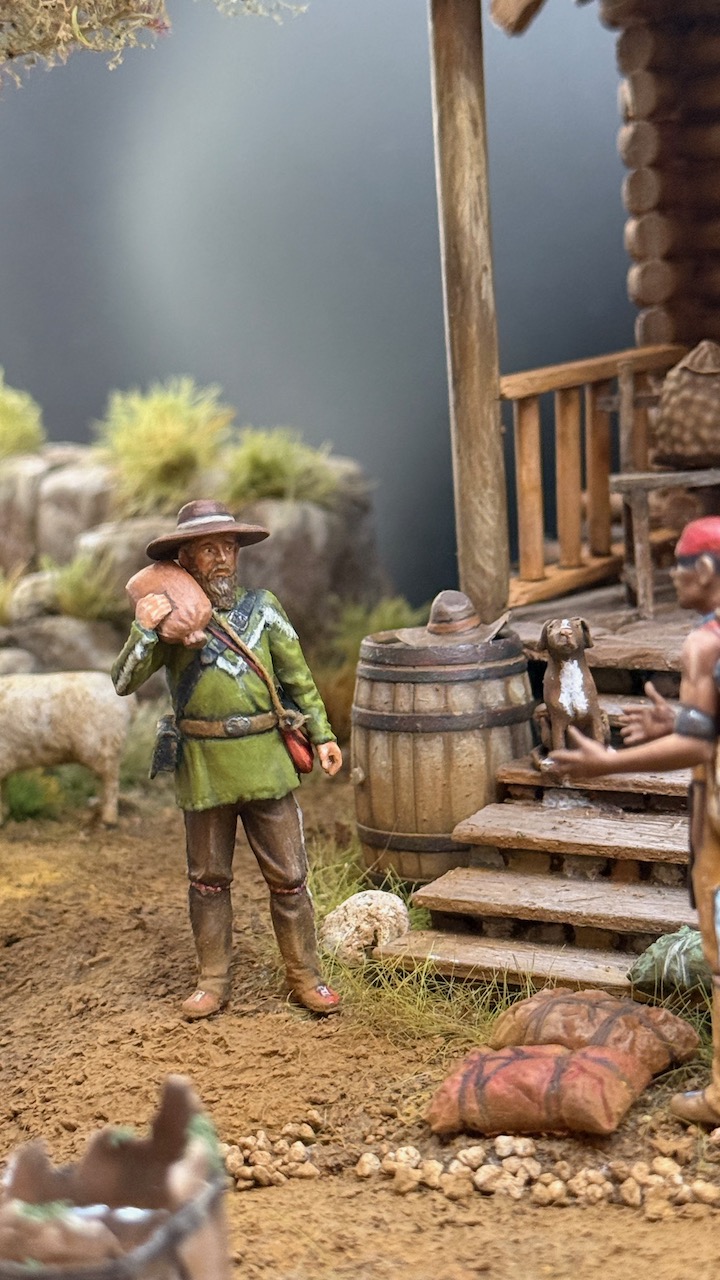
Tahu era giunto al crepuscolo del giorno precedente, con pelli pregiate sulle spalle e lo sguardo fiero. Era sceso dal versante orientale, attraversando i territori della sua gente per portare un segno di amicizia. Elias, che stava sistemando un sacco sul carro, lo aveva riconosciuto subito. Nessuno parlò subito. Solo Clara, la moglie di Elias, ruppe il silenzio: "Abbiamo del pane fresco e una coperta pronta se vorrai fermarti."
Clara era una donna dal passato semplice ma intenso. Elias l'aveva conosciuta in un piccolo insediamento commerciale lungo il Missouri, dove lei lavorava come tessitrice. Si erano sposati in fretta, sotto un cielo di nuvole basse, e si erano trasferiti a Timber Creek per iniziare una nuova vita. La figlia, Lydia, era nata durante la grande nevicata del 1822, e oggi osservava l'indiano da dietro la madre, con un misto di timore e curiosità.
Six years earlier, Elias had been shot in the leg during a hunting trip in the lands beyond Timber Ridge. Lost in the woods and in the dead of winter, it was Tahu, then little more than a boy, who found him, unarmed and unconscious. Despite the tension between trappers and Indians, Tahu had cared for him for three days in a makeshift shelter, then helped him return to the valley. They had not seen each other since. Until today.
Tahu had arrived at dusk the previous day, with fine furs on his shoulders and a proud look. He had come down from the eastern slope, crossing the lands of his people to bring a sign of friendship. Elias, who was placing a sack on the wagon, had recognized him immediately. No one spoke immediately. Only Clara, Elias's wife, broke the silence: "We have fresh bread and a blanket ready if you want to stay."
Clara was a woman with a simple but intense past. Elias had met her in a small trading post along the Missouri, where she worked as a weaver. They had married quickly, under a sky of low clouds, and moved to Timber Creek to start a new life. Their daughter, Lydia, had been born during the great snow of 1822, and today she watched the Indian from behind her mother, with a mixture of fear and curiosity.
Six ans plus tôt, Elias avait reçu une balle dans la jambe lors d'une partie de chasse dans les terres au-delà de Timber Ridge. Perdu dans les bois, en plein hiver, c'est Tahu, alors encore un enfant, qui l'avait retrouvé, désarmé et inconscient. Malgré les tensions entre trappeurs et Indiens, Tahu l'avait soigné pendant trois jours dans un abri de fortune, puis l'avait aidé à regagner la vallée. Ils ne s'étaient pas revus depuis. Jusqu'à aujourd'hui.
Tahu était arrivé la veille au crépuscule, de belles fourrures sur les épaules et l'air fier. Il était descendu du versant est, traversant les terres de son peuple pour apporter un signe d'amitié. Elias, qui déposait un sac sur le chariot, l'avait immédiatement reconnu. Personne ne parla immédiatement. Seule Clara, la femme d'Elias, rompit le silence : « Nous avons du pain frais et une couverture prêts si vous souhaitez rester.»
Clara était une femme au passé simple mais intense. Elias l'avait rencontrée dans un petit comptoir commercial le long du Missouri, où elle travaillait comme tisserande. Ils s'étaient mariés rapidement, sous un ciel de nuages bas, et avaient déménagé à Timber Creek pour commencer une nouvelle vie. Leur fille, Lydia, était née pendant les grandes neiges de 1822, et ce jour-là, elle observait l'Indien derrière sa mère, avec un mélange de peur et de curiosité.
Seis años antes, Elías había recibido un disparo en la pierna durante una cacería en las tierras más allá de Timber Ridge. Perdido en el bosque, en pleno invierno, fue Tahu, entonces poco más que un niño, quien lo encontró, desarmado e inconsciente. A pesar de la tensión entre tramperos e indígenas, Tahu lo cuidó durante tres días en un refugio improvisado y luego lo ayudó a regresar al valle. No se habían vuelto a ver desde entonces. Hasta hoy.
Tahu había llegado al anochecer del día anterior, con finas pieles sobre los hombros y una mirada orgullosa. Había bajado de la ladera oriental, atravesando las tierras de su pueblo para traer una señal de amistad. Elías, que estaba colocando un saco en la carreta, lo reconoció de inmediato. Nadie habló enseguida. Solo Clara, la esposa de Elías, rompió el silencio: «Tenemos pan fresco y una manta listos si quieres quedarte».
Clara era una mujer con un pasado sencillo pero intenso. Elías la conoció en un pequeño puesto comercial a orillas del río Misuri, donde trabajaba como tejedora. Se casaron rápidamente, bajo un cielo de nubes bajas, y se mudaron a Timber Creek para comenzar una nueva vida. Su hija, Lydia, nació durante la gran nevada de 1822, y hoy observaba al indio desde atrás de su madre, con una mezcla de miedo y curiosidad.
Sechs Jahre zuvor war Elias bei einem Jagdausflug jenseits von Timber Ridge ins Bein geschossen worden. Verloren im Wald und mitten im Winter, war es Tahu, damals kaum älter als ein Junge, der ihn unbewaffnet und bewusstlos fand. Trotz der Spannungen zwischen Fallenstellern und Indianern hatte Tahu ihn drei Tage lang in einer provisorischen Unterkunft gepflegt und ihm dann geholfen, ins Tal zurückzukehren. Seitdem hatten sie sich nicht mehr gesehen. Bis heute.
Tahu war am Vortag in der Abenddämmerung angekommen, mit feinen Pelzen auf den Schultern und einem stolzen Blick. Er war vom Osthang herabgekommen und hatte das Land seines Volkes durchquert, um ein Zeichen der Freundschaft zu bringen. Elias, der gerade einen Sack auf den Wagen lud, hatte ihn sofort erkannt. Niemand sprach sofort. Nur Clara, Elias' Frau, brach das Schweigen: „Wir haben frisches Brot und eine Decke bereit, falls du bleiben möchtest.“
Clara war eine Frau mit einer einfachen, aber intensiven Vergangenheit. Elias hatte sie in einem kleinen Handelsposten am Missouri kennengelernt, wo sie als Weberin arbeitete. Sie hatten schnell unter tief hängenden Wolken geheiratet und waren nach Timber Creek gezogen, um ein neues Leben zu beginnen. Ihre Tochter Lydia war während des großen Schneefalls von 1822 geboren worden und beobachtete den Indianer heute hinter ihrer Mutter mit einer Mischung aus Angst und Neugier.
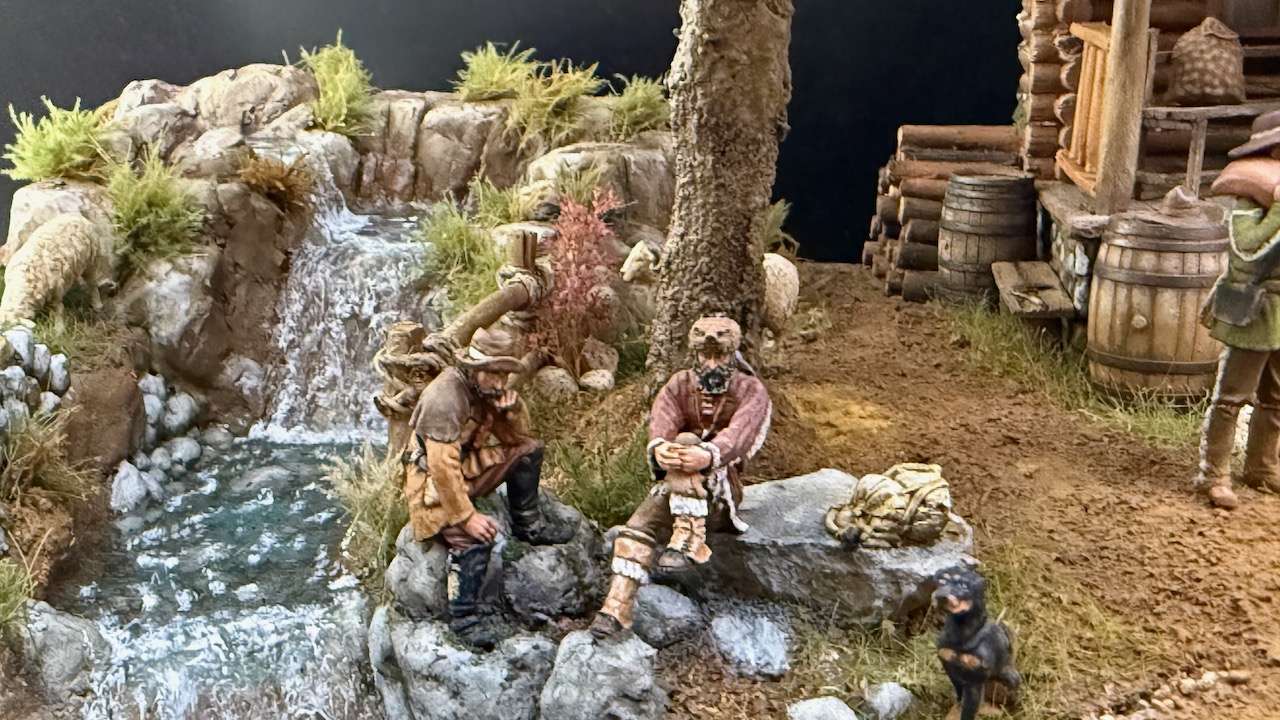
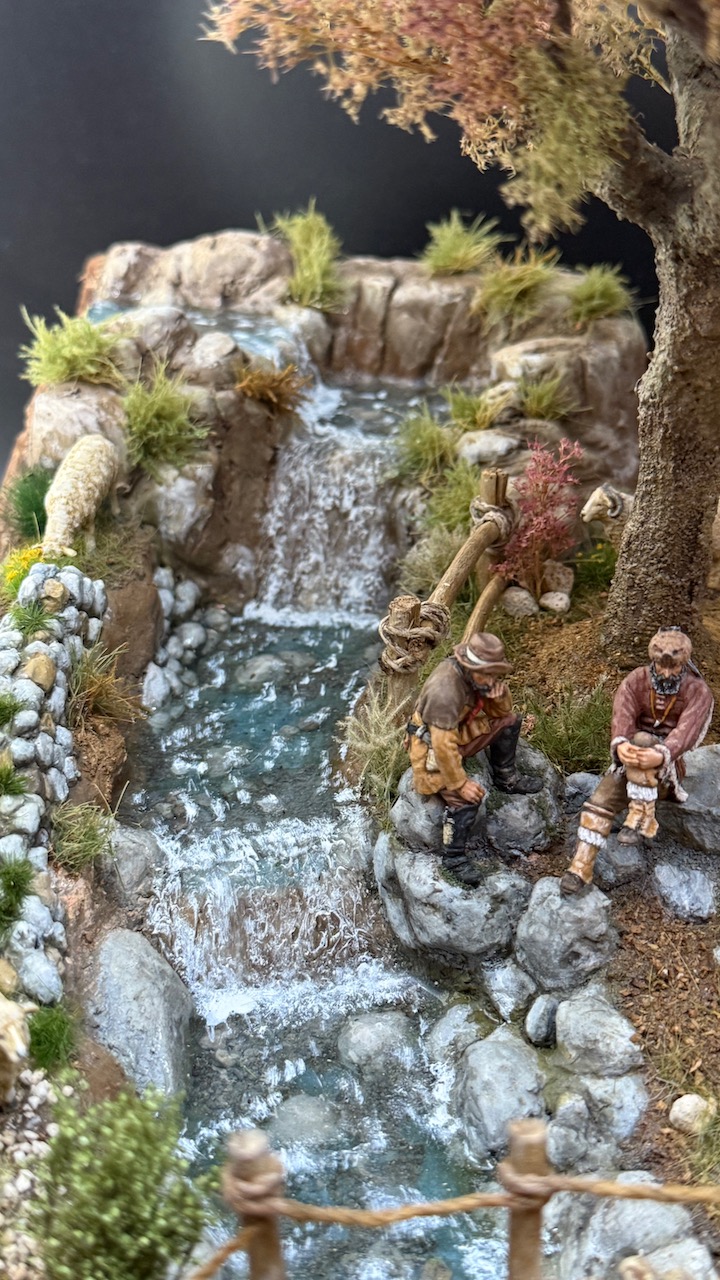
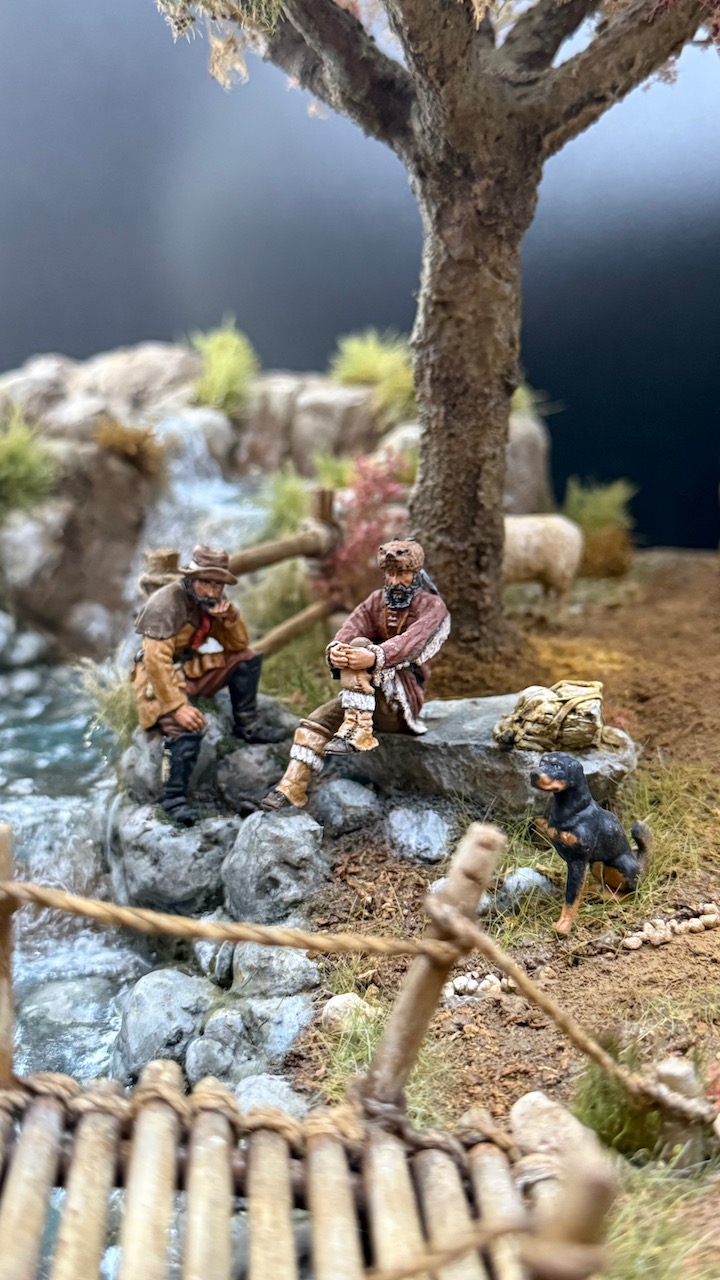
Vicino al ruscello, seduti su un tronco levigato dal tempo, stavano due vecchi amici di Elias: Hank "Grizz" Jefferson e Seth "One-Eye" McCallen. Avevano tracciato sentieri insieme, affrontato orsi e fame nei lunghi inverni. Ora, più che cacciatori, erano testimoni del passato, legati da storie, whisky e cicatrici. Si erano fermati a Timber Creek per riposare durante il loro viaggio verso il mercato delle pellicce a nord. "Non potevamo passare di qui senza bere una tazza con Elias," aveva detto Grizz.
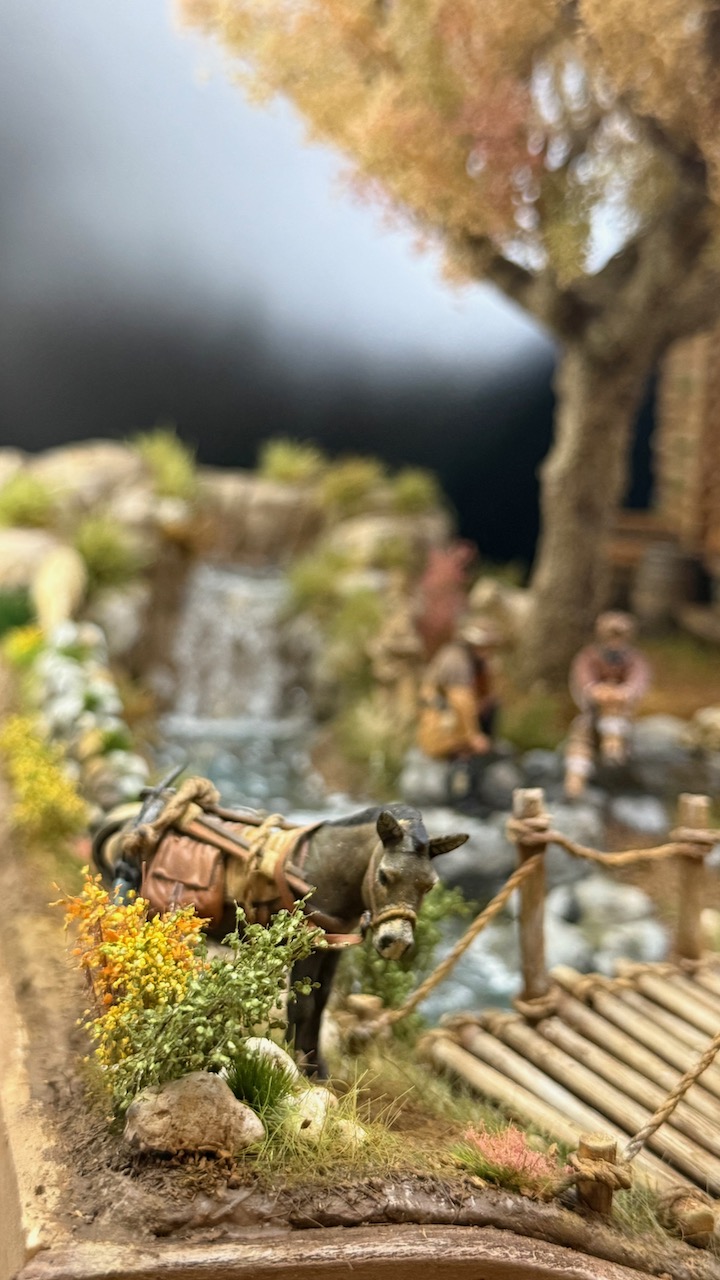
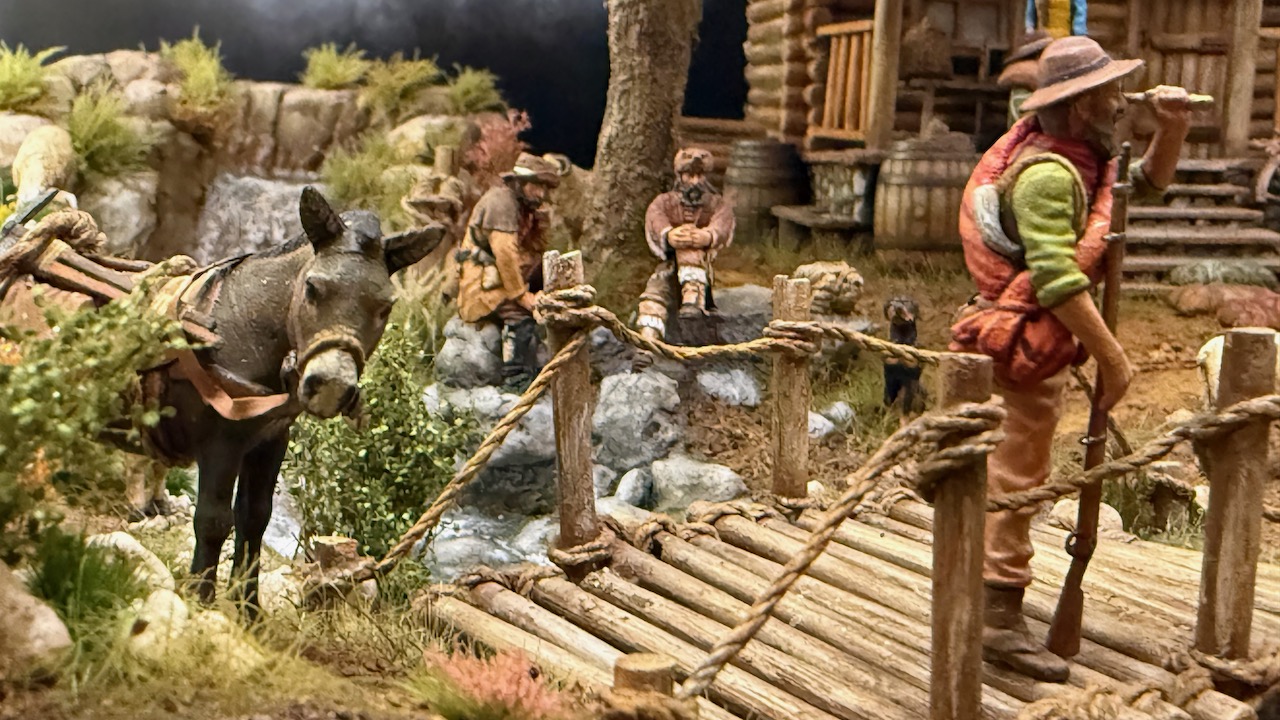
Sul ponte, Wade osservava la valle con il binocolo, il fucile scarico appoggiato al braccio e l'asino "Dusty" che sbuffava al suo fianco. Wade era un viaggiatore, un nomade dell'anima. Aveva udito parlare dell'arrivo di Tahu da un cacciatore incrociato tre giorni prima, e aveva deciso di deviare verso Timber Creek. Aveva perso qualcosa durante i suoi viaggi, forse la speranza, e oggi cercava risposte tra gli alberi.
By the creek, sitting on a log smoothed by time, were two old friends of Elias: Hank "Grizz" Jefferson and Seth "One-Eye" McCallen. They had blazed trails together, faced bears and hunger in the long winters. Now, more than hunters, they were witnesses to the past, bound by stories, whiskey and scars. They had stopped at Timber Creek to rest on their way to the fur market up north. "We couldn't pass through here without having a cup with Elias," Grizz had said.
On the bridge, Wade watched the valley through binoculars, his empty rifle resting on his arm, his donkey "Dusty" snorting at his side. Wade was a traveler, a nomad of the soul. He had heard of Tahu's arrival from a hunter he had met three days before, and had decided to detour to Timber Creek. He had lost something in his travels, perhaps hope, and today he searched for answers in the trees.
Au bord du ruisseau, assis sur un tronc d'arbre poli par le temps, se trouvaient deux vieux amis d'Elias : Hank « Grizz » Jefferson et Seth « One-Eye » McCallen. Ensemble, ils avaient tracé des sentiers, affronté les ours et la faim durant les longs hivers. Désormais, plus que des chasseurs, ils étaient témoins du passé, liés par des histoires, du whisky et des cicatrices. Ils s'étaient arrêtés à Timber Creek pour se reposer avant de se rendre au marché aux fourrures, plus au nord. « On ne pouvait pas passer par ici sans prendre un verre avec Elias », avait dit Grizz.
Sur le pont, Wade observait la vallée à la jumelle, son fusil vide posé sur son bras, son âne « Dusty » s'ébrouillant à ses côtés. Wade était un voyageur, un nomade de l'âme. Il avait appris l'arrivée de Tahu par un chasseur rencontré trois jours auparavant et avait décidé de faire un détour par Timber Creek. Il avait perdu quelque chose au cours de ses pérégrinations, peut-être l'espoir, et aujourd'hui, il cherchait des réponses dans les arbres.
Junto al arroyo, sentados en un tronco alisado por el tiempo, estaban dos viejos amigos de Elias: Hank "Grizz" Jefferson y Seth "One-Eye" McCallen. Habían abierto camino juntos, se habían enfrentado a osos y al hambre en los largos inviernos. Ahora, más que cazadores, eran testigos del pasado, unidos por historias, whisky y cicatrices. Se habían detenido en Timber Creek para descansar de camino al mercado de pieles del norte. "No podíamos pasar por aquí sin tomar una copa con Elias", había dicho Grizz.
En el puente, Wade observaba el valle con binoculares, con el rifle vacío apoyado en el brazo y su burro "Dusty" resoplando a su lado. Wade era un viajero, un nómada del alma. Se había enterado de la llegada de Tahu por un cazador que había conocido tres días antes y había decidido desviarse a Timber Creek. Había perdido algo en sus viajes, quizás la esperanza, y hoy buscaba respuestas en los árboles.
Am Bach saßen auf einem von der Zeit glattgeschliffenen Baumstamm zwei alte Freunde von Elias: Hank „Grizz“ Jefferson und Seth „Einauge“ McCallen. Sie hatten gemeinsam Wege gebahnt, in den langen Wintern Bären und Hunger getrotzt. Jetzt waren sie mehr als nur Jäger, sie waren Zeugen der Vergangenheit, verbunden durch Geschichten, Whiskey und Narben. Sie hatten am Timber Creek Halt gemacht, um sich auf dem Weg zum Pelzmarkt im Norden auszuruhen. „Wir konnten hier nicht durchkommen, ohne mit Elias eine Tasse zu trinken“, hatte Grizz gesagt.
Auf der Brücke beobachtete Wade das Tal durch ein Fernglas, sein leeres Gewehr ruhte auf seinem Arm, sein Esel „Dusty“ schnaubte neben ihm. Wade war ein Reisender, ein Nomade der Seele. Er hatte von einem Jäger, den er drei Tage zuvor getroffen hatte, von Tahus Ankunft gehört und beschlossen, einen Abstecher nach Timber Creek zu machen. Er hatte auf seinen Reisen etwas verloren, vielleicht Hoffnung, und heute suchte er in den Bäumen nach Antworten.
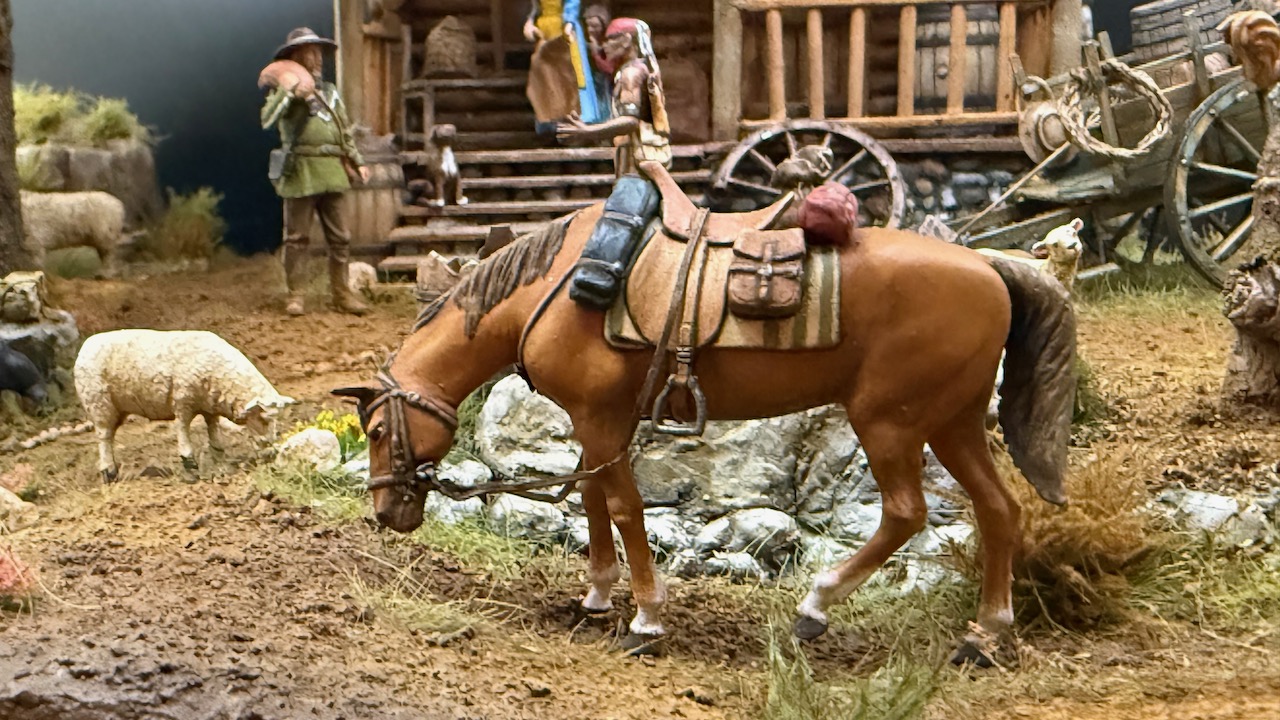
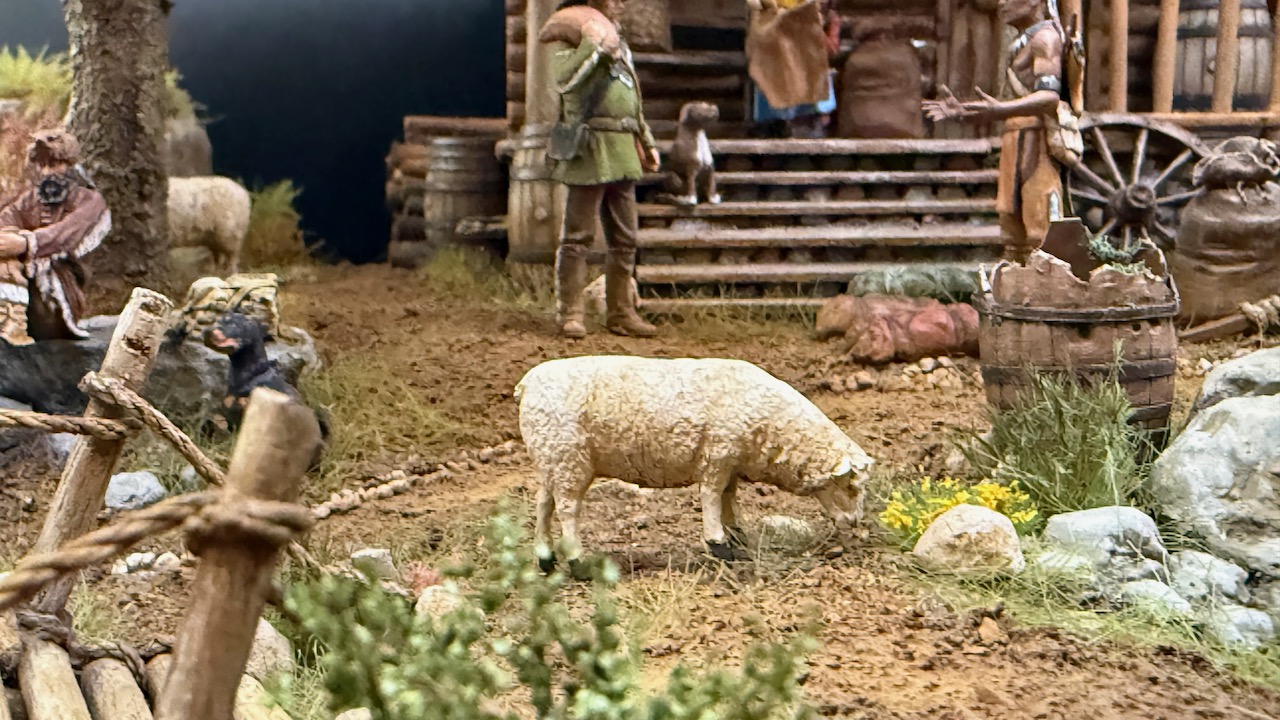
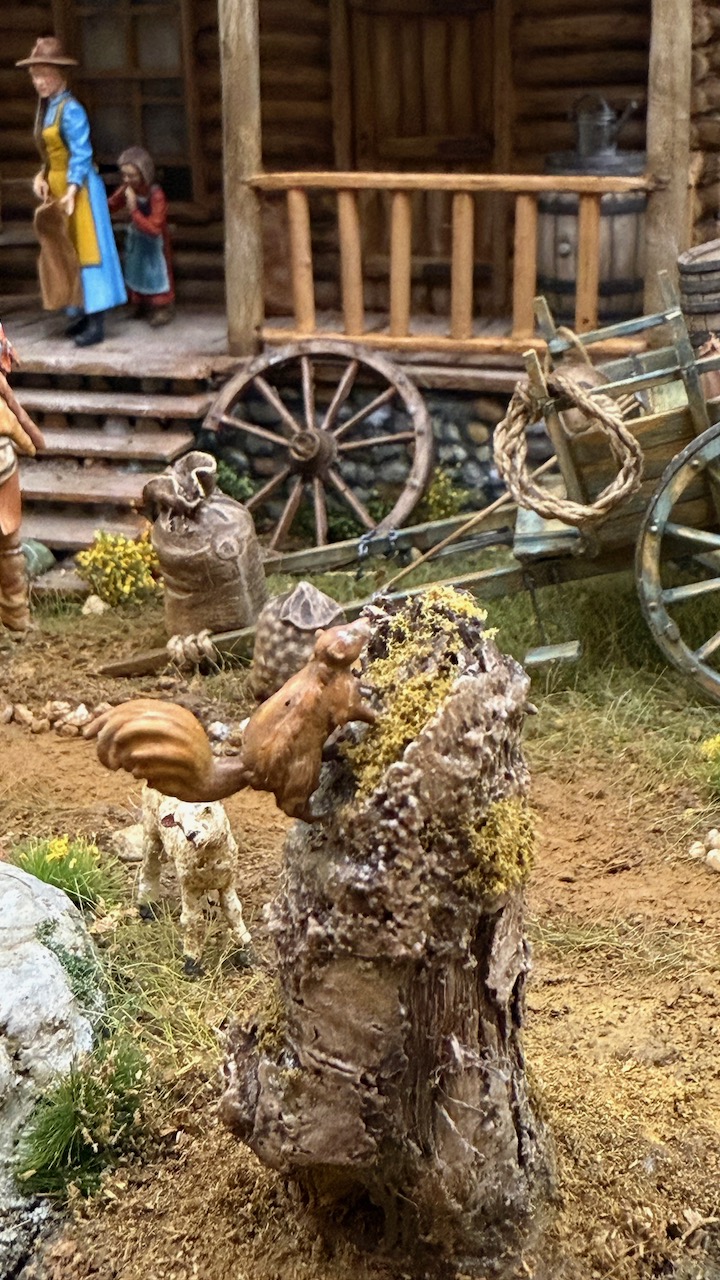
Il cane Brisk se ne stava tranquillo, annusando l'aria, Moose osservava attento, mentre uno scoiattolo saliva nervoso sul tronco dell'acero spezzato. Il cavallo, Buck, brucava sereno, mentre le pecore si aggiravano lente vicino al ruscello. Nell'aria si respirava qualcosa di nuovo, non solo la resina dei pini o il fumo del camino, ma una possibilità.
The dog Brisk sat quietly, sniffing the air, Moose watched intently, while a squirrel nervously climbed the trunk of the broken maple. The horse, Buck, grazed serenely, while the sheep wandered slowly by the creek. There was something new in the air, not just pine sap or chimney smoke, but possibility.
Le chien Brisk était assis tranquillement, reniflant l'air. Moose observait attentivement, tandis qu'un écureuil grimpait nerveusement sur le tronc de l'érable brisé. Le cheval, Buck, broutait sereinement, tandis que les moutons erraient lentement près du ruisseau. Il y avait quelque chose de nouveau dans l'air, pas seulement de la sève de pin ou de la fumée de cheminée, mais du potentiel.
El perro Brisk permanecía sentado en silencio, olfateando el aire. Moose observaba atentamente, mientras una ardilla trepaba nerviosa al tronco del arce roto. El caballo, Buck, pastaba serenamente, mientras las ovejas vagaban lentamente junto al arroyo. Había algo nuevo en el aire, no solo savia de pino o humo de chimenea, sino una posibilidad.
Hund Brisk saß ruhig da und schnüffelte, Moose beobachtete aufmerksam, während ein Eichhörnchen nervös den Stamm des gebrochenen Ahorns hochkletterte. Pferd Buck graste friedlich, während die Schafe langsam am Bach entlangwanderten. Es lag etwas Neues in der Luft, nicht nur Kiefernharz oder Kaminrauch, sondern eine Möglichkeit.
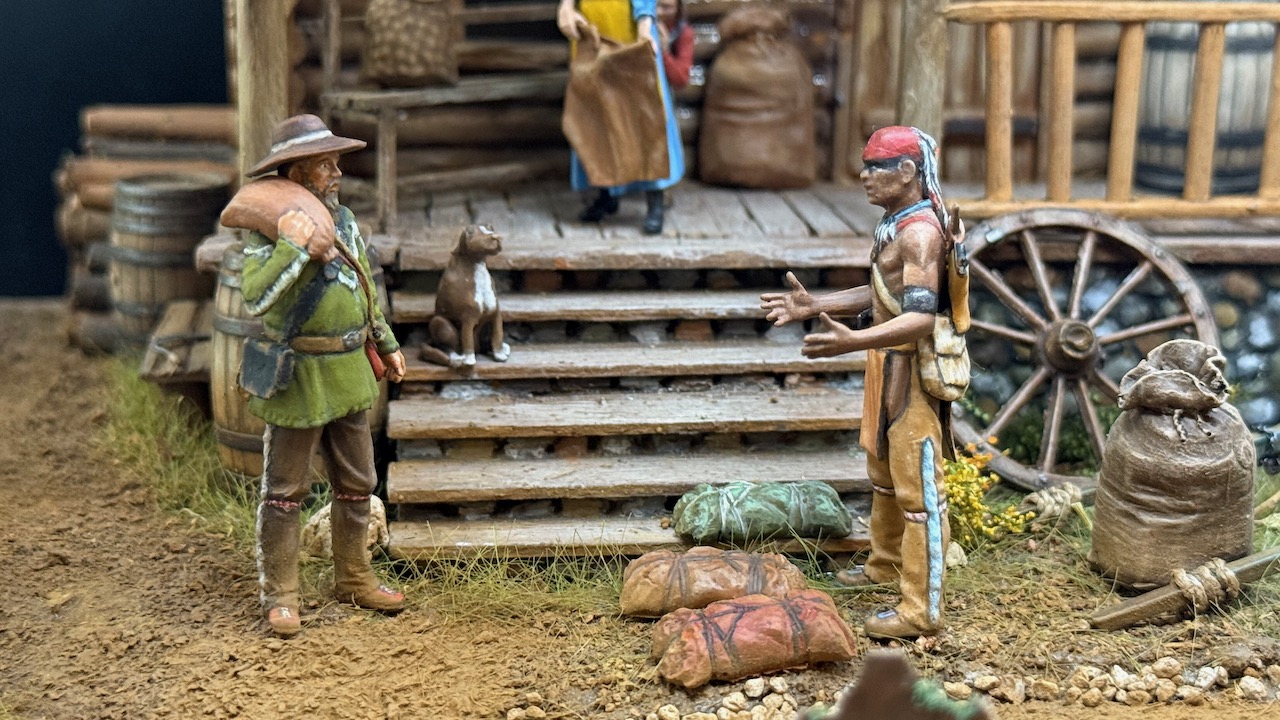
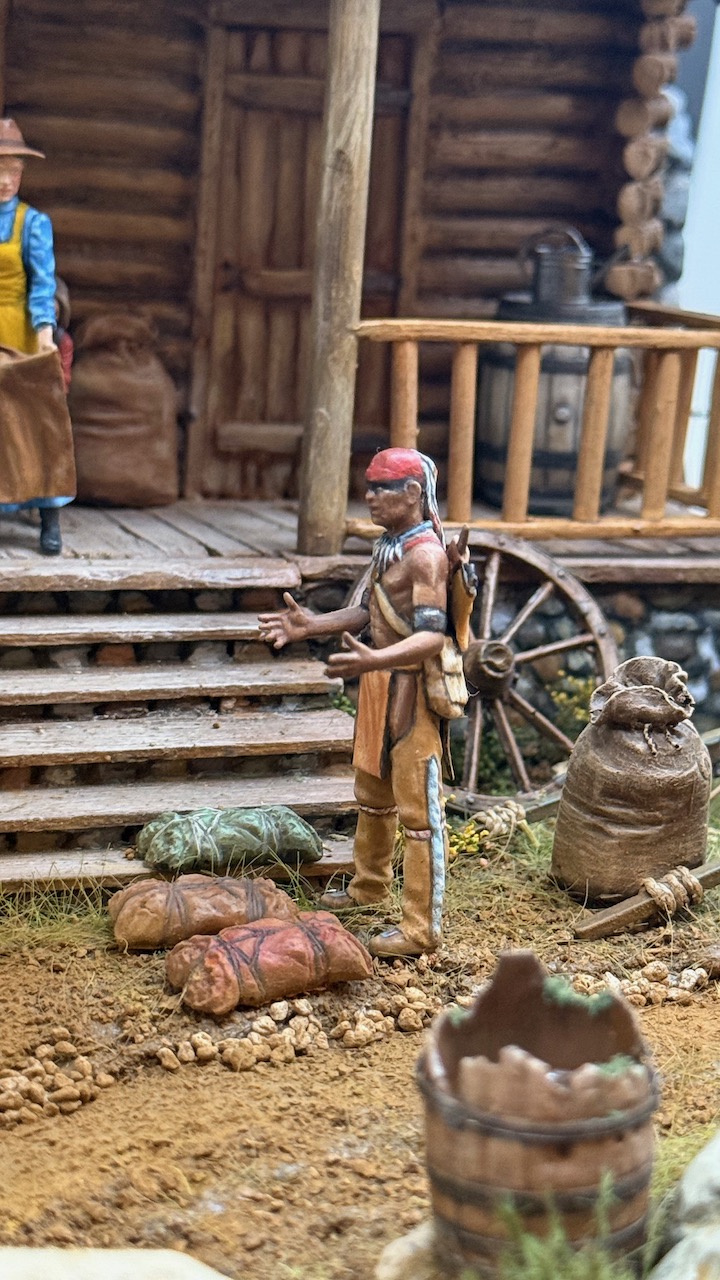
Quando Tahu avanzò con passo lento, Elias fece un passo avanti. Nessuno disse nulla. Ma bastò che Elias posasse il sacco e tendesse la mano. Tahu, dopo un attimo di silenzio, fece lo stesso.
E fu così che, tra le vette silenziose, nacque un gesto che valeva più di mille parole: lì dove i trappers accolgono il guerriero.
When Tahu advanced slowly, Elias took a step forward. No one said anything. But it was enough for Elias to put down the sack and hold out his hand. Tahu, after a moment of silence, did the same.
And so it was that, among the silent peaks, a gesture was born that was worth more than a thousand words: there where the trappers welcome the warrior.
Tandis que Tahu avançait lentement, Elias fit un pas en avant. Personne ne dit mot. Mais cela suffisait à Elias pour poser le sac et tendre la main. Tahu, après un moment de silence, fit de même.
C'est ainsi que, parmi les sommets silencieux, naquit un geste qui valait plus que mille mots : là où les trappeurs accueillent le guerrier.
Cuando Tahu avanzó lentamente, Elías dio un paso al frente. Nadie dijo nada. Pero bastó para que Elías dejara el saco en el suelo y extendiera la mano. Tahu, tras un momento de silencio, hizo lo mismo.
Y así, entre los picos silenciosos, nació un gesto que valió más que mil palabras: allí donde los tramperos reciben al guerrero.
Als Tahu langsam näher kam, trat Elias einen Schritt vor. Niemand sagte etwas. Doch Elias genügte es, den Sack abzustellen und die Hand auszustrecken. Tahu tat nach einem Moment des Schweigens dasselbe.
Und so entstand inmitten der stillen Gipfel eine Geste, die mehr sagte als tausend Worte: Dort, wo die Fallensteller den Krieger willkommen heißen.